Engagement Options
1. Rapid Diagnostics for Turnarounds
·Typical duration*: 2 to 4 weeks
·Best for: urgent performance constraints, unclear bottlenecks,
recurring firefighting
·Outputs: current-state diagnosis, quantified constraint,
prioritised turnaround plan, quick wins, decision pack for
leadership
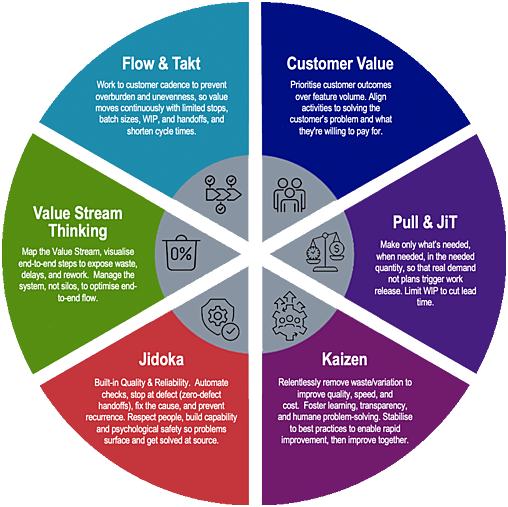
2. Flow and Speed (Lean) improvements
·Typical duration*: 4 to 12 weeks
·Best for: long lead times, queueing, handoffs, rework loops,
poor predictability
·Outputs: redesigned flow, standard work, and visual
management, capacity, and bottleneck plan, cadence for daily
management
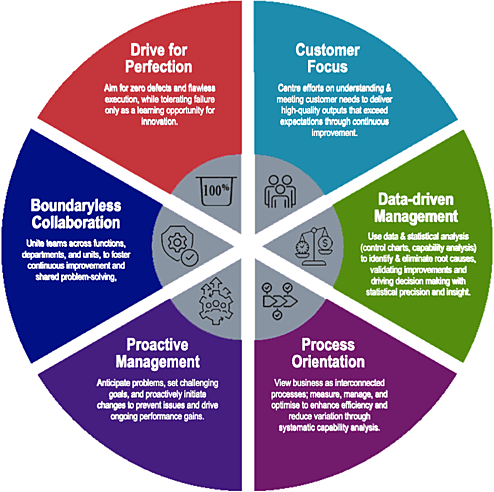
3. Quality & Variation (Six Sigma)improvements
·Typical duration*: 8 to 16 weeks
·DMAIC framework adopted
·Best for: defects, instability, hidden variation, weak
measurement confidence
·Outputs: validated root cause, improved capability, control
plan, measurement, and monitoring approach that prevents
backsliding
4. Lean Governance (Gains that stick)
·Typical duration*: 4 to 10 weeks (can run alongside
improvements)
·Best for: initiatives that fade, inconsistent adherence to
standards, and poor escalation
·Outputs: governance cadence, operating system rhythms,
visibility and accountability, leader standard work, sustainment
design
*(depending on scope and complexity)
Help me choose
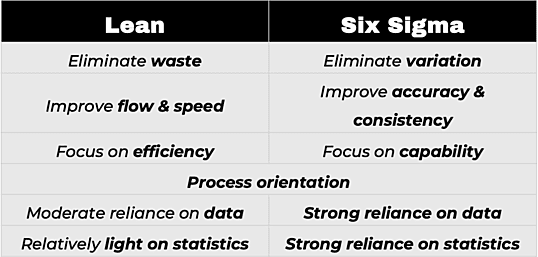
=> Is lead time or defect rate the bigger pain?
Lead time: Lean
Defect rate: Six Sigma
=> Do you have reliable measurements?
No: Measurement System Analysis (Six Sigma MSA)
=> How costly are mistakes?
Impacts throughput (flow, speed): Lean
Impacts quality (variability, consistency): Six Sigma
=> If velocity and flow are concerns:
Start with Lean. (Stabilisation)
=> If accuracy and consistency are concerns:::
Use Six Sigma. (Sustainable Capability)
=> If you need both:::
Start with Lean to stabilise first, then add targeted Six Sigma
where variation hurts outcomes (leakage of clients/profitability,
and rework/returns)
=> Can you commit budget now to resolve the issue/s?
NO: Commit funds for next budget cycle (Let us guide you)
YES: Contact Us
What you can expect
Deliverables we commonly provide
· A clear current-state picture, including constraints and impacts.
· A prioritised improvement backlog linked to measurable
outcomes.
· A focused set of implemented changes, not just
recommendations.
· A governance cadence and control plan so results are
sustained.
· Capability transfer to your team as part of the work.
What we do not do
· We do not ask for perfect data before taking action.
Skills Transfer
We deliver the following (often as part of an engagement):
1) Lean education:
- Can be done across selected Lean tools and methods;
2) Six Sigma education:
- Can be done for leaders and teams at a high level to enable
them to run effective Six Sigma projects as key stakeholders
- Clinics, workshops, and executive briefings aligned to your
project.
- White Belt, Yellow Belt, Green Belt, and Black Belt training
coming soon (It is preferable that your organisation has at
least 1 Minitab licence)
Lean and Six Sigma Frameworks