Skip to searchSkip to main content
Stratocube Advisory Services
Enhancing your capabilities

Case studies of typical projects we have helped clients with

PROJECT SHOWCASE 1: PLASTICS PACKAGING MANUFACTURING OPERATION - PROCESS EFFICIENCY & PROFITABILITY TRANSFORMATION

Objective


Deliver a holistic manufacturing process optimisation solution for a plastic packaging business to improve overall efficiencies, reduce waste, improve profitability, and improve customer satisfaction using a Lean approach.


Key Findings


No WIP ConfigurationThe absence of WIP system configuration resulted in random work stoppages due to unavailable materials and the absence of an accurate view of actual stock on hand required for job planning and sales commitments.

Poor Integrated Planning & Cross-Process CoordinationPoor job planning and coordination across the three production processes (blow-moulding, injection moulding and dispenser assembly) resulted in frequent debottlenecks and machine stoppages.

Disruptive Short-Run Prioritisation: Long-run production volumes were interrupted to commence short-run production in favour of ‘special/privileged’ customers, creating substantial inefficiencies, in part due to die changes and colour purging.

Inefficient Job Loading: Job planning (factory loading) was inefficient due to a lack of understanding of material availability constraints (absence of WIP management), creating frustration amongst the sales staff and production staff who were demotivated.

Time and Material Waste: Being a 5 x 8-hour single shift operation, substantial time was being lost each day due to required machine warm-ups and colour purging.  Colour runs were being interchanged with clear/transparent runs, creating further inefficiencies due to colour purging requirements.  Virgin raw material was being used for colour purging instead of recycled/reclaimed material, which was much cheaper because insufficient recycled/reclaimed material had been purchased.


Solutions 


Automated WIP Enhancements: Introduction of automated WIP system enhancements to remove inventory availability constraints with real-time stock availability views, enabling more efficient production planning and execution.

Bottleneck Removal: Key production processes (blow-moulding, injection moulding and assembly factories) were debottlenecked through a careful process of measurement, time and motion studies, observation and applying the theory of constraints, to produce line throughput models that improved overall flow (in the process further unlocking secondary and tertiary bottlenecks).

Optimised Job Planning: Job planning (factory loading) was also optimised once the WIP solution was installed and integrated with the sales order process.

SMED Changeover Reductions: SMED principles were applied by introducing automated machine warm-ups before shift commencement, reducing unavailable time.

Optimised Production Sequencing: Where possible, colour runs were sequenced from lighter to darker colours, helping to reduce colour residue purging and clear/transparent products were allocated to specific machines/lines (continuity of ‘transparents' with no colour purging).

Elimination of Disruptive Small Runs: Non-value adding (inefficient, costly) small-run production was eliminated (focusing on customers that could optimally load the factory with longer and more profitable runs), thereby also substantially optimising Overall Equipment Effectiveness (OEE).


Key Results


Significant Financial Uplift: Rapid improvement in financial performance, with profitability boosted through waste reduction, optimised production flow, and elimination of unprofitable small-run jobs - financial turnaround within 9 months - 18% increase in annualised NPBITD.

Efficiency Gains: Improved throughput in blow-moulding, injection moulding, and assembly operations by removing bottlenecks and streamlining changeovers using SMED principles.

Enhanced Production Planning: Real-time WIP visibility and integrated job planning enabled more accurate scheduling, minimised downtime, and improved on-time delivery performance.

Quality and Waste Reduction: Colour sequencing and machine allocation strategies reduced material waste, colour purging time, and non-value-adding activities.

Optimised Resource Utilisation: Factory capacity loaded with longer, more profitable production runs, driving higher Overall Equipment Effectiveness (OEE) and sustained productivity gains.

Customer Satisfaction Improvement: Improved service reliability and delivery performance, enhancing customer trust and retention - overall customer satisfaction improved by over 60%, to more than 90% of customers voting Agree or Strongly Agree (on a 5-point Likert scale) when responding to the statement "I am satisfied with overall service levels (On-Time Delivery and In Full)".

Blow Moulding Injection Moulding
PROJECT SHOWCASE 2: DEFENCE MANUFACTURING PROCESS INDUSTRIALISATION & LEAN TRANSFORMATION

Objective


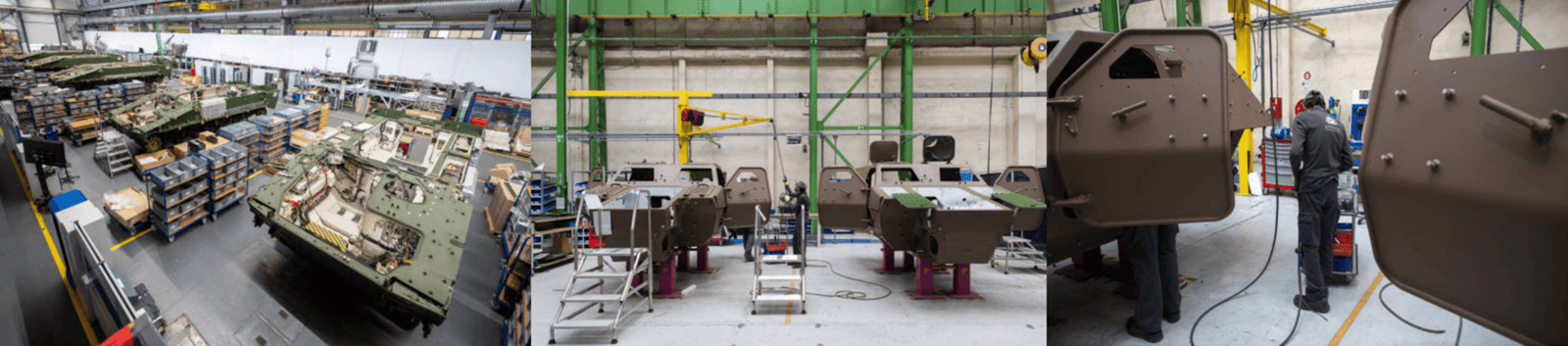
This complex project required transitioning a defence manufacturing facility from pre-production prototypes to full-scale industrialised output through Lean manufacturing, quality improvement, and optimised material flow for mission-configurable vehicles (land fighting, command and control, logistics, and medical support vehicles).


Key Findings


Initial observations included:

- Poor design-office coordination

- Assembly bottlenecks

- High quarantine rates

- Poor internal material flows (suppliers to warehouse, warehouse to assembly)

- Quality management inadequacies (suppliers, assembly, paintshop), and

- Overall, poor planning and execution of prototype assembly.


Solutions


This project required a multidisciplinary approach, including: IT, Planning, Supply Chain management, Engineering & Design, and Quality Control. Solutions comprised the introduction of various Lean principles, e.g.:

- Waste elimination (time/effort, quality)

-Process and value stream mapping: Kanban, WIP limits, supermarkets, etc.

- Flow optimisation through: bottleneck reduction; improving warehouse management (inbound/outbound stock); kit preparation, 

   marshalling and staging of components, sub-assemblies, tooling and consumables (Supermarkets)

- 5s and visual management techniques: for the assembly area

- Daily and weekly stand-ups: weekly standups included key suppliers)

- Driving a proactive kaizen culture: supported with multiple lean tools and methods

- Quality upliftQuality management supported by transferring skills w.r.t Root Cause Analysis methodologies (5 WHYs, Ishikawa, A3,    

   and the Apollo method for high complexity problems) to drive down parts quarantining and improve throughput (flow).


Key Results


Transition to Volume Production: Successfully moved from prototype-based assembly to industrialisation-ready production of mission-configurable military vehicles.

Throughput and Efficiency Gains: Reduced assembly bottlenecks, improved material flow, and streamlined processes through value stream mapping, bottleneck removal, and 5S implementation.

Quality Improvement: Lowered parts quarantining rates and rework through proactive quality management, root cause analysis training, and integration of quality checks earlier in the process.

Stronger Cross-Functional Coordination: Improved communication between design, engineering, production, and suppliers via daily and weekly stand-ups, reducing delays and design and assembly misalignments.

Enhanced Material Readiness: Introduced more effective warehouse management, improved and fail-safe (dual redundant) network coverage, kit preparation, and marshalling processes, ensuring components and tooling were available exactly when needed.

Sustainable Continuous Improvement Culture: Embedded kaizen principles and visual management techniques, creating a culture of ongoing performance improvement with improved capacity and capability.

PROJECT SHOWCASE 3: QUALITY EXCELLENCE AND PROCESS TRANSFORMATION IN AEROSPACE DEFENCE MANUFACTURER

Objective


High-impact process quality transformation in a highly regulated and precision-driven military aeronautics environment.


Key Findings


Component Manufacturing: Bottlenecks, overprocessing, rework; Increased lead times, cost overruns.

Quality Inspection: Batch-based inspection; Late identification of quality issues, high rework levels, root causes masked.

Testing & Validation: Manual processes, long test cycles (100%, not sampling); Slows release, affects responsiveness.

Jig Changeover & Setup: Inefficient changeovers; Reduced flexibility, increased inventory.

Material Flow & Inventory: Excess WIP, poor visual management; Space constraints, cash tied up.

Engineering-Production Handover: Poor version control/responsiveness, Misaligned specs or late design changes; Rework, delays, strained relationships.

Stakeholder Alignment: Siloed decision-making, Late feedback loops.


Solutions


Detail Multi-level Process Mapping:

- All production processes;

- Identify LHF areas for improvement

Deep Root Cause Analysis
(5 Whys, Ishikawa, Apollo for field failures)

Component Manufacturing

- Manufacture to order only, not to stock; 

- Intermediate components/sub-assemblies only move upon pull requests

- Rework obviated through individual station quality control (not end-of-line)

Quality Inspections

- Introduced SPC - sample-based inspections with Process Capability Indices and Benchmarks

- Immediate feedback to the Engineering Design office

- Setting agreed Ppk, Cpk, and Sigma Level targets to satisfy customer requirements

Testing & Validation

- Testing conducted on a sample basis, not 100% testing, following SPC principles

Engineering-Production Handover

- Implemented design freezes to stabilise production runs

- Design changes differentiated between critical design changes (affecting the performance of products) and optimisation (improved layouts for ease of repair for example).

- Significant reduction in rework and scrap.

Implemented A3 Thinking to create project visibility with clear goals

Stakeholder Alignment

- Key groups all involved: Quality assurance, design engineering, production floor leads, test lab managers, compliance officers

- Introduced daily stand-ups to facilitate faster communication horizontally and vertically

- Identified and focused on quick wins to gain trust and momentum

- ADKAR process to manage change and key stakeholders. (Spun off secondary project on organisation design to improve management processes, collaboration and communication - flattening of structure.)

SMED (Single-Minute Exchange of Die)

- Jig Changeovers & Setups; Jig redesign and simplification.

- Poka Yoke - Jigs redesign to prevent incorrect orientation/insertion of components

- Dual jig setup for product variant switching

Standardised Work & Visual Management

Material Flow & Inventory:

- Detailed documentation of SOP/Standards for mission-critical processes

- Moved away from large batch production to either Single-Piece Flow or Small Batch where relevant.

- Implemented "Supermarkets" and Kanban system for effective material flow control => Focus: Line-side component availability, lab test kits, precision parts.

- iPads for station updates linked to multiple process monitors/digital dashboards to visualise progress and escalation points

- Cycle times visible against the required Takt time.


Key Results


Reduced Rework & Lead Times: Substantial reduction in rework, scrap, and inspection lead times through the shift from 100% batch inspections to SPC-based sampling and in-station quality control.

Improved Production Flow: Improved production flow and flexibility with the elimination of key bottlenecks, implementation of SMED principles for jig changeovers, and the adoption of single-piece or small-batch production.

Enhanced Product Quality: Enhanced product quality and reliability via tighter process capability targets (Ppk, Cpk, Sigma Level) and immediate feedback loops to design engineering.

Accelerated Testing Cycles: Shorter testing and validation cycles through sampling-based testing, enabling faster product release without compromising compliance or performance.

Stronger Cross-Functional Collaboration: Improved cross-functional collaboration and decision-making speed through daily stand-ups, structured stakeholder alignment, and the ADKAR change management framework.

Optimised Material Flow: Optimised material flow and reduced WIP inventory via Kanban systems, supermarket staging, and digital dashboards for real-time process visibility.

Strengthened Governance & Standards: Strengthened governance and process standardisation with documented SOPs, standardised work practices, and tooling improvements.

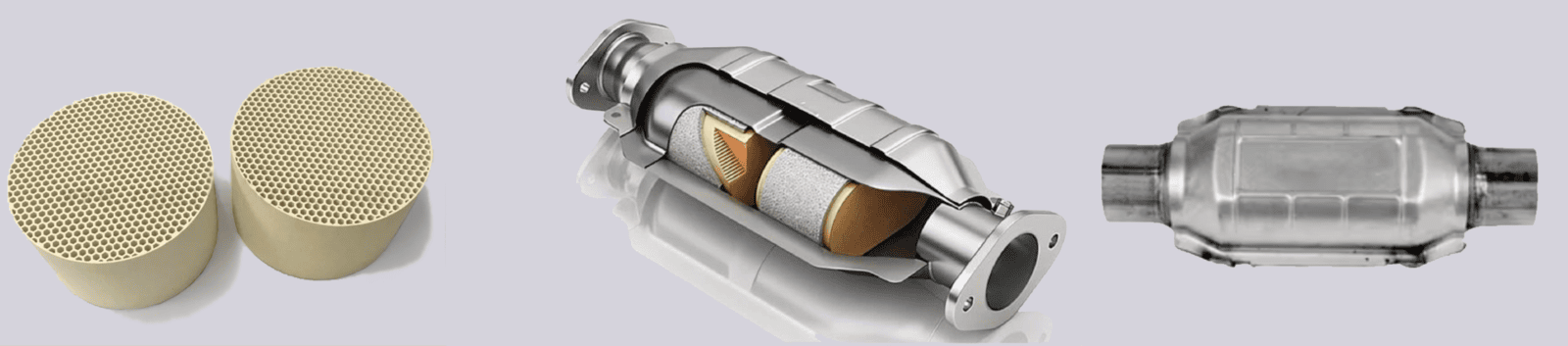
PROJECT SHOWCASE 4: CATALYTIC CONVERTER MANUFACTURER - SUPPLY CHAIN AND PROCUREMENT PROCESS TRANSFORMATION

Objective


Redesign Supply Chain Management system/protocols; Drive Optimal Resource Utilisation for FTEs; Increase Efficiencies and Reduce Risk; Reduce Total Cost to Company.


Key Findings


Decentralised buying: Engineers/supervisors doing procurement; Inconsistency, poor pricing, maverick spend

Lack of category strategy: No strategic sourcing approach by spend category; Higher TCO, missed supplier synergies; General spend fragmentation.

Limited spend visibility: Data scattered across departments; Cannot control or optimise

Energy input procurement: Natural gas not strategically sourced; Exposure to price volatility.

No procurement governance: No policies/processes for who buys what: Risk of non-compliance and inefficiency

Indirect spend fragmentation: Office, IT, MRO spend fragmented; Inflated cost, unmanaged supplier base


Solutions


Spend Analysis & Baseline Establishment: Categorised all procurement spend (direct, indirect, MRO, energy, IT); Pareto analysis conducted to isolate top 20% spend categories; Spend cube produced (by category, supplier, buyer) + heat map of risk & cost-saving potential.

Centralisation & Role Redefinition: Removed tactical buying responsibilities from engineers, supervisors, maintenance technicians - allowing them to focus on core tasks; Established a small, centralised procurement team - 3 FTEs to handle high-impact (high cost, risk) categories - automate low cost, risk purchases; Trained staff in requisitioning protocols; implemented delegation of authority matrix.

Category Management Implementation: Key Categories: Direct: Raw ceramic materials, kiln consumables; Indirect: MRO, PPE, IT; Utilities: Natural gas, electricity.

Services: Facilities management, Maintenance, waste management: Strategic sourcing using total cost of ownership (TCO) lens; Developed 12-month category plans with sourcing levers (volume leverage, substitution, renegotiation).

Supplier Rationalisation & Performance Management: Reduced supplier base; consolidated spend to strategic partners; Kraljic Matrix (Purchasing Portfolio Analysis) to classify commodities and suppliers by risk and value; Introduced SRM scorecards (price, quality, delivery, innovation, risk).

Contract Management & Governance: Standardised procurement processes and templates (RFQs, contracts, SLAs); Implement procurement policies with escalation paths; 

Introduced simple digital workflow on their ERP system (Syspro); 

Energy Procurement Strategy: Engaged energy specialists/aggregators for gas sourcing.

Contracts to protect against price spikes.

Digital & Automation Levers: Implemented basic e-Procurement tools (catalogue-based buying, electronic RFQs).

Automated PR/PO process for low-cost/risk items and developed dashboards for spend visibility.


Results


Cost Savings & Risk Reduction: Reduced Total Cost of Ownership (TCO) through strategic sourcing, supplier consolidation, and long-term contracts for high-cost commodities such as natural gas, insulating the business from market volatility.

Operational Efficiency: Freed up engineering and supervisory staff to focus on core production activities by transferring tactical buying to a centralised procurement function, supported by clear role definitions and delegation of authority.

Improved Spend Control: Achieved full spend visibility across all categories (direct, indirect, MRO, energy, IT) via category analysis, digital dashboards, and ERP integration, enabling proactive cost and risk management.

Supplier Performance Gains: Strengthened supplier relationships and improved quality, delivery, and innovation performance through SRM scorecards and strategic partner engagement.

Governance & Compliance: Reduced non-compliance risk and standardised procurement operations through policy implementation, standard templates, and digital workflows, creating a consistent, auditable process.

Process Automation: Increased procurement speed and accuracy by introducing e-Procurement tools, catalogue-based buying, and automated PR/PO approvals for low-cost, low-risk items.

PROJECT SHOWCASE 5: ORGANISATIONAL REDESIGN & GOVERNANCE REFORM FOR AN AFRICAN CIVIL AVIATION AUTHORITY

Objectives


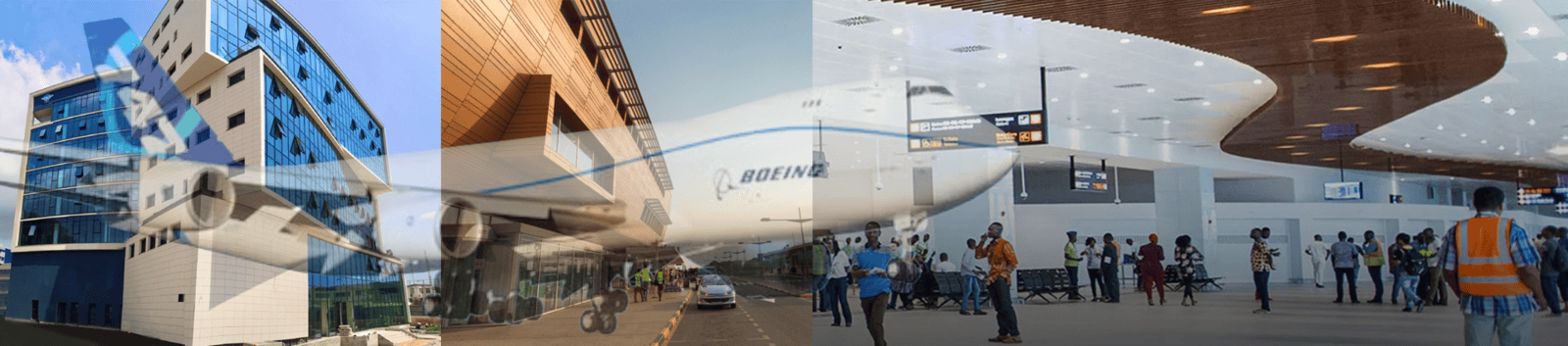
The organisation was led by a Director General, who wanted an organisation-wide evaluation/audit and redesign as he mistrusted his top management to create the transformation momentum required to take the organisation into the future of aviation as a central pivot location in Africa.  This re-design would require defining the logical organisational architecture/operating model that would unlock and deliver ongoing value to its stakeholders and architecting the flow of work through the organisation in terms of work areas, work roles, levels of work and governance.


Key Findings


Fragmented Organisational Structure & Strategic Malaise: The Civil Aviation Authority was an ill-conceived amalgam of distinct yet separable organisational entities with distinct responsibilities (Regulatory, Air Traffic Control, Air-side Operations, and Land-side Operations), and lacking clear strategic direction.

Workforce and Leadership Imbalance: The organisation was characterized by a bloated workforce, a balance of power that had shifted away from leadership, an absence of clearly defined levels of work, job grading, pay scales, and a performance management system, and isolated pockets of critical skills and knowledge.

Dis-integrated Work Force Planning: Lack of appreciation/understanding of stratified levels of work, job design, job grading, remuneration, and performance management principles. (e.g., salaries based on tenure).

Severe Accountability Gaps: Maintenance, repair, and capital works were characterised by long lead times with the absence of accountability and consequence management. The absence of accountability and consequence management was also prevalent in the rest of the organisation too.


Solutions


Foundational focus: There was a dire need to "get back to basics" as opposed to grand-scale transformation, creating a foundation upon which more strategically oriented transformation could subsequently be undertaken. Intermediate solutions comprised:

Strategic alignment: Facilitation of a new organisational strategy, with clarified and documented strategic intent (Vision, Mission, Values, Customer Promise) and which implicitly defined a ‘structure for the future’;

Process mapping: Definition of Levels of Work, and devising the flow of work through documented business process mapping for each business entity (Regulatory, Air Traffic Control, Air-side Operations, and Land-side Operations) – top 3 levels of business processes aligned to the organisational strategy, with clear identification of dependencies and risks;

Job grading implementation: Introduction of and training on a stratified job grading system (Paterson), followed by execution/implementation for the most generic job types, with appropriate job descriptions and titles, skills and competencies required to perform the job, qualifications and experience, key performance areas, and key performance indicators. With clear reporting lines – emphasis was on co-development, followed by independent development.

Remuneration reform: Development of a new sliding scale remuneration system based on job grade and not on tenure as was previously the case.

Freezing of annual increases for certain overpaid jobs until organizationally aligned.

Performance Management: Working with the Executives and HODs to workshop the principles and structure of a new system of Performance Agreements. Developed a cascading system of Performance Agreements that integrated the strategy plan.  The performance agreement system comprised strategic themes, organisational context (the whys), clear deliverables with performance measures (KPI’s), balanced scorecard perspectives, and time frames.  Once complete at the Exec and HOD levels, the HODs were then responsible for deeper rollout. 

Governance enhancement: A suite of new HR policies was drafted to help formalise and guide the required organisational changes and provide formal authority in respect of aspects such as: Job Grading; Pay System and Allowances; Leave (Annual, Occasional and Sick); Travel; Expense Claims Reimbursements; Transportation (Collections, Deliveries and Errands), etc.


Key Results


Strategic positioning: A refreshed and new-look Organisational Strategy addressing the key Strategic Themes (Regulation, ATC & Operations).

Future readiness: An organisation that was operationally ready to embrace to embrace its future in aviation;

Overhead cost reduction: Potential for up to 30% reduction in overhead costs over the following three years.

Coordination and alignment: Improved understanding across functions of departmental interdependencies.

Levels of work and remuneration: Improved understanding of the value of individual roles in terms of the new Job Grading system, and commensurate new remuneration structure.

People climate: Steadily improving climate amongst staff, with willingness to embrace the ‘new look’ organisation.

Balance of powershift: The dysfunctional balance of power dynamics being exercised by Air Traffic Control and Engineering, which had eroded leadership influence, was decisively neutralised and brought under effective control.

Restored leadership confidence: A Director General who was highly satisfied with the project outcomes and who could once again place his trust in the organisation to effectively carry out its mission.  He was well-positioned to implement the unbundling recommendations as a result.


PROJECT SHOWCASE 6: MISSION-CRITICAL CREDIT BUREAU RELATIONSHIP STABILISATION & OPERATING MODEL REDESIGN

Objective


Develop a future-proof operating model to ensure accurate billing, timely payments, and uninterrupted Credit Bureau services for a client that had a mission-critical business relationship with one of the country’s largest Credit Bureaus, providing credit worthiness and asset valuation services for purposes of policy inception and claims processing.  It was required to resolve a long-outstanding billing/invoice payment issue to: (i) avert suspension of subscriber accounts; (ii) enable user entities (subscribers) to directly authorize invoices for payment before being processed by Accounts Payable; and (iii) enable the Accounts Payable function to make prompt payment of all invoices for each separate subscriber, without undue delays.


Key Findings


Service delivery mechanism: The service provider enabled credit-worthiness and asset valuation query and response transactions via an online portal and peer-to-peer APIs.

Substantially aged creditor balances: The business relationship was characterised by long overdue creditors amounts, some aged over 360 days.

Service suspension threat: The service provider was threatening to shut down the platform until the client effected full payment.

Account Ownership Obscurity: The legacy setup of the account obfuscated identification of Business Unit owners of the services being purchased (the subscribers/departments and individual operators).

Lack of Relationship Ownership: Total lack of ownership by the client of the service provider relationship, leaving Procurement to try to ‘figure it out’; however, Procurement was ill-equipped to do so.

System Configuration Gaps: Complete lack of understanding of how the service provider’s systems were configured each time a new subscriber was added and how the service provider treated/managed the client’s data, and the service provider itself had little understanding of the structure of the client’s operations resulting in incorrect configurations being applied – this resulted in the invoices not being understood/interpreted correctly.

Inactive Subscriber Accounts: Individual subscriber accounts had, in many cases, been signed up by people who had since left the organisation.

Invoice Aggregation Issues: The service provider’s Invoices were aggregated at Insurance License level (the legal entity) with little cross-reference to users/subscribers, severely hampering and complicating the invoice authorisation and payment process.  This often resulted in Group Finance both authorising invoices and making payment, violating the principle of segregation of duties, resulting in multiple audit findings.

Persistent Unresolved Problem: This situation had persisted for years, with no one able to resolve this structural and systemic problem


Solutions


Stakeholder Engagement: The solution initially required deep engagement with key stakeholders of the Credit Bureau, more notably their IT and Finance Heads, to understand the fundamental structure and related billing parameters within the Portal, API peer-to-peer setup, and their finance system parameters.

Critical Data Structure Identification: From these deep engagements, a picture began to emerge as to the critical data fields that needed to be populated in their systems and how that influenced the invoicing process.

Organisation-structure and Employee-Based Cross-Referencing: A key data field used was the end-user's email address.  From several hundred email addresses in their system, it was possible to cross-reference those to the client’s HR database containing people and structure information. I was also able to identify users that had in fact left the organisation, and users that had transferred to other parts of the organisation where their roles had changed, and inactive users who were still in the client organisation but no longer used the credit bureau platform.

Validated Subscriber List: The list was reduced to one that only included people currently employed by the client and currently transacting on the credit bureau platform. Also, using the HR database, it was possible to identify exactly in which License (Short- or Long-Term Insurance), Business Unit, Department, Region, and Branch these employees fell, and created a list of approximately three dozen uniquely identifiable User Entities (Subscriber Accounts),

Sustainable Implementation Plan: Further engagement with the Credit Bureau’s relevant IT and Finance resources concerned how best to implement a sustainable solution, and one that did not require intensive maintenance.  An approach was subsequently agreed, with clear actions, responsibilities and timelines.


Results


Structured Account FrameworkImplemented a redesigned subscriber account structure with unique account numbers, mapped to the client’s full organisational hierarchy (Operating License, Business Unit, Department, Region, Branch). The Credit Bureau’s portal and finance system were updated to capture all structural data, approval authorities, and invoice routing rules.

Subscriber-level Invoice VisibilityEnabled invoice generation at the unique Subscriber Entity level, allowing departmental and branch managers to directly validate and authorise transactions for their areas.

Data Accuracy & MaintenanceDeveloped and deployed a sustainable system to keep User Entity data current, ensuring inactive, transferred, or departed users were promptly removed or reassigned.

Continuity of Critical Services: Averted suspension of mission-critical subscriber accounts for policy inception and claims and settled the entire aged creditor book at a negotiated discount and restored operational continuity.

Restored Relationship ConfidenceResolved a long-standing structural and systemic dispute, enabling both organisations to move forward with a clean slate and mutual trust in the new processes.

PROJECT SHOWCASE 7: MRP INVENTORY DATA REMEDIATION & SAP IMPLEMENTATION READINESS PROJECT (CEMENT MANUFACTURER)

Objective


A client was on the cusp of introducing SAP to replace its old ERP system.  We were co-opted onto the Steering Committee with the initial objective of providing the necessary steering guidance for all Supply Chain-related matters (SAP Materials Management module). The objective would later evolve after initial investigations and findings.


Findings


Poor data quality: Upon early investigation of the existing ERP system, it became apparent that the quality of MRO inventory data was inferior. Non-standardised numbering and descriptions led to substantial duplications and poor capital commitment decisions.

Need for inventory governance framework: Not only would a large-scale multi-factory wall-to-wall stock-take program be required, but also a system and governance framework to manage the take-on, coding, and description of all stock using internationally accepted best inventory management practices (for both existing and future new stock).

Absence of Executive mandate: On conclusion of the investigation, a report was presented to the Executive Committee of  setting out the key findings, which comprised:

- sharing the current status and risks;

- setting out the known and likely root causes of the current materials management malaise;

- proposing an action plan to remediate the state of poor inventory data, to establish a sustainable inventory management system, henceforth that would align with the SAP implementation project.  


Solutions


Executive mandate secured: Based on the report on the key findings and recommendations, an immediate executive mandate was secured to execute the recommendations, which included driving down the excessive capital tied up in stock.  Full budget allocation was secured.

Vendor Selection & Capability Match (Methodology and System): Conducted a market scan and appointed a vendor with proven capability and innovative technology to execute a comprehensive organisation-wide wall-to-wall stock-take and implement a best-practice inventory codification and description methodology.

Comprehensive Stock-Take & Codification: Led the execution of the stock-take across all factories and warehouses, with data populated into a structured database containing identifiers (factory, warehouse, bin location, etc.), linked to stock item technical and financial data and pictures, and standardised descriptions using the Standard Noun-Modifier Dictionary (SMD) inventory nomenclature.

Duplicate Elimination & Data Integrity: Integrated stock-take data into a unified codification system coupled with the SMD, identifying and validating intra- and inter-warehouse duplicates, resolving redundancies, and ensuring data consistency to support the SAP implementation.

Innovative Technology Integration: Embedded the SMD codification methodology directly into SAP, creating a sustainable platform for ongoing MRO inventory management and enabling effective ABC classification and strategic stock controls.

Change Leadership & Stakeholder Alignment: Led cross-functional teams through the transformation, aligning stakeholders across operations, supply chain, and leadership to adopt new inventory management standards and governance processes.

Sustainable Governance & Capability Building: Established and resourced a centralised stock coding office, trained dedicated personnel, implemented governance protocols, and embedded processes for all future stock item take-on, codification and descriptions using the embedded standards.


Results


Centralised Inventory Support: A centralised service function was established to support all factories with new inventory take-on and stock item codification.  This function also managed Inventory Master Data in SAP.

Best Practice Implementation: Operationally critical stock item data was fully remediated, with implementation of international best practices for: (1) standardising stock item descriptions using the Standard Noun-Modifier Dictionary (SMD); and (2) codifying all inventory items integrated with the SMD description methodology - this created a solid platform for the efficient ongoing management of all MRO inventory.

Duplicate Elimination: All intra-warehouse and inter-warehouse duplicate stock items were validated and resolved, reducing the total number of inventory line items in the ERP system by more than 26%.

ABC Classification Enablement: The effective implementation of ABC stock classification in SAP was facilitated.

Strategic Stock Integration: Strategic Stock stores were implemented in the SAP database for common high-value and critical stock items.

Operational Efficiency Improvement & Capital Release: Drove efficiency improvements and optimised stock levels, releasing over 32% of tied-up working capital within two years, while ensuring no delays to the critical SAP implementation timeline.

PROJECT SHOWCASE 8: ONLINE DIAGNOSTIC FOR PROCUREMENT EXCELLENCE & SUPPLY CHAIN LEVERAGE

Project overview


The requirement was to develop an online Leading Procurement Practices profiling/diagnostic tool to drive the adoption of leading procurement practices that would result in improved supply chain leverage and management.


Scope of the diagnostic tool


- Extensive research was conducted to establish and codify those practices in the procurement space that, when fully adopted, would provide the basis for maximum leverage of the supply chain, reducing supply chain risk, maximising commercial opportunties, and providing a basis for a more coherent and integrated internal value chain in procurement.  

- This led to the development of a comprehensive online Procurement Practices Profiling Diagnostic tool designed to assess organisational procurement maturity across nine key practice areas, covering both functional and strategic dimensions - in essence, a targeted Capability Maturity Model (CMM), specifically for procurement.


Impact (Benchmarking and insights)


- The diagnostic tool benchmarks performance against recognised (global) leading procurement practices, identifies capability gaps, and generates actionable insights with tailored recommendations to facilitate the adoption of leading procurement practices, enhance category management, and optimise supplier relationships.

- Instead of the traditional Pareto approach, which can result in attention being spread too thin, the results of the diagnostic process help organisations to focus on the 'critical few' items that will have the largest impact right now.

- The tool enables targeted adoption of leading procurement methods, enhancing category management, optimising supplier relationships, supporting improved supply chain leverage, reducing total cost of ownership, and strengthening competitive positioning in the market.

PROJECT SHOWCASE 9: GOVERNANCE, RISK MANAGEMENT & COMPLIANCE ENABLEMENT

Development of Governance Instruments


- Our expertise includes the design and implementation of comprehensive end-to-end governance instruments (policies, general procedures, standard operating procedures, and work instructions) to strengthen governance, ensure general and regulatory compliance, and improve operational consistency across multiple industry sectors.

- Drawing on our extensive expertise in this area, each engagement begins with a structured discovery process to establish the underlying context, need and purpose of the governance instruments required — identifying the specific pain points, risks, operational needs, and the strategic and operational environment within which the instruments must operate. 


Discovery


The discovery process includes:

- determining which governance provisions are mandatory non-negotiables versus those offering optional approaches;

- assessing interdependencies with other organisational governance instruments;

- ensuring alignment with both organisational and functional strategies;

- evaluating governance requirements against the audit context (recent findings, observations, compliance gaps, etc.);

- considering options for ‘future proofing’ against anticipated changes, and;

- whether the governance initiative forms part of a broader suite of related instruments or is a stand-alone instrument. 

Careful attention is paid to embedding recognised best practices, resolving defined strategic or operational challenges, and satisfying relevant regulatory or statutory requirements. 


Supporting Learning Content


- Every governance instrument (whether policy, general procedures, standard operating procedures, or work instructions) can be supported by detailed, fit-for-purpose learning content, made available either via the client’s Intranet or integrated into their Learning Management System (LMS), enabling scalable training, consistent interpretation, and sustained knowledge transfer across the organisation.

- Development of supporting learning content (and ensuring full roll-out thereof) is strongly recommended as a foundational pillar of effective compliance.  Experience has shown that organisations that don't follow this protocol have statistically-significant worse rates of subsequent compliance. 

- Factors in learning content development and deployment must pay heed to: (i) Initial compliance levels; (ii) Time to steady-state; (iii) Variability across the organisation; (iv) Durability of compliance; (v) Downstream outcomes.  This is also impacted by the training philosophy of the organisation, viz. outcome metrics vs attendance metrics. Compliance improvement (with effective outcomes-oriented training) can exceed more than 80%.


Policy Formulation Training


In addition to the development of governance instruments, we are also able to deliver specific training on Policy Formulation through bespoke client engagements, to embed best practices and enhance internal policy development capability based on best practices.